Choosing a kitchen backsplash tile can seem like a small decision compared with cabinetry or countertops, but it has a significant impact on how your kitchen looks and feels. With so many tile shapes, colors, patterns, textures, and materials available, it’s easy to wonder: Should you choose a timeless kitchen backsplash or something more distinctive and on-trend? I don’t think you necessarily have to choose one or the other. A well-designed kitchen should feel personal to you while also working beautifully with the architecture of your home. The goal isn’t to avoid anything current. It’s to understand which elements are likely to have lasting appeal and where you can introduce personality in a thoughtful way. Here are some things I consider when selecting a kitchen backsplash tile.
Start With the Kitchen, Not the Tile
Before falling in love with a particular tile, look at the bigger picture. Your backsplash should work with the cabinetry, countertops, flooring, hardware, lighting, and architecture of the room. It also needs to make sense for how you live in the space.
Consider:
- The architectural style of your home
- The size and layout of the kitchen
- Your cabinet color and door style
- The countertop material
- The amount of visual detail already in the room
- How much maintenance you’re comfortable with
- Your budget
- How long you expect to live in the home
A backsplash shouldn’t be selected in isolation. It is one element of a larger composition.
What Makes a Kitchen Backsplash Feel Timeless?
Timeless doesn’t necessarily mean plain or predictable. A timeless backsplash typically has qualities that allow it to work with changing furnishings, paint colors, and accessories. Classic materials, thoughtful proportions, restrained colors, and simple patterns tend to have lasting appeal. But even a classic tile can be interpreted in many different ways. A simple rectangular tile, for example, can look completely different depending on its size, finish, grout color, and installation pattern. A classic tile installed in a herringbone pattern can feel very different from the same tile installed in a traditional running bond. Natural stone is another material that can bring depth and character without relying on a particular trend. Its natural variation becomes part of the design rather than something that needs to be replaced when styles change. Timeless design is less about choosing the safest option and more about choosing elements that have a reason to belong in the room.
What Makes a Backsplash Feel Trendy?
A backsplash can feel trend-driven when its appeal depends heavily on a particular color, pattern, shape, or design moment. That doesn’t mean you should avoid these choices. If you genuinely love a bold patterned tile or an unexpected color, it may be exactly what makes your kitchen feel like yours. The important question is whether you’re choosing it because you truly love it—or because it happens to be everywhere right now. A design that reflects your personality and works with the architecture of your home can have much more staying power than a supposedly “safe” choice that never felt personal to begin with.
You Don’t Have to Choose Between Timeless and Interesting
This is where kitchen backsplash design gets especially interesting. You can start with a classic material and give it personality through:
- A distinctive tile shape
- An unexpected installation pattern
- Handmade or subtly textured tile
- Natural variation
- A carefully chosen grout color
- A soft, muted color
- A mix of traditional and modern elements
- A statement tile used selectively
For example, a simple white tile can become much more distinctive through scale, texture, or installation pattern without competing with the rest of the kitchen. Likewise, a more dramatic material can work beautifully when the cabinetry and other finishes are kept relatively restrained. The most successful kitchens often have a balance of quiet and interesting elements.
A Real-Life Example
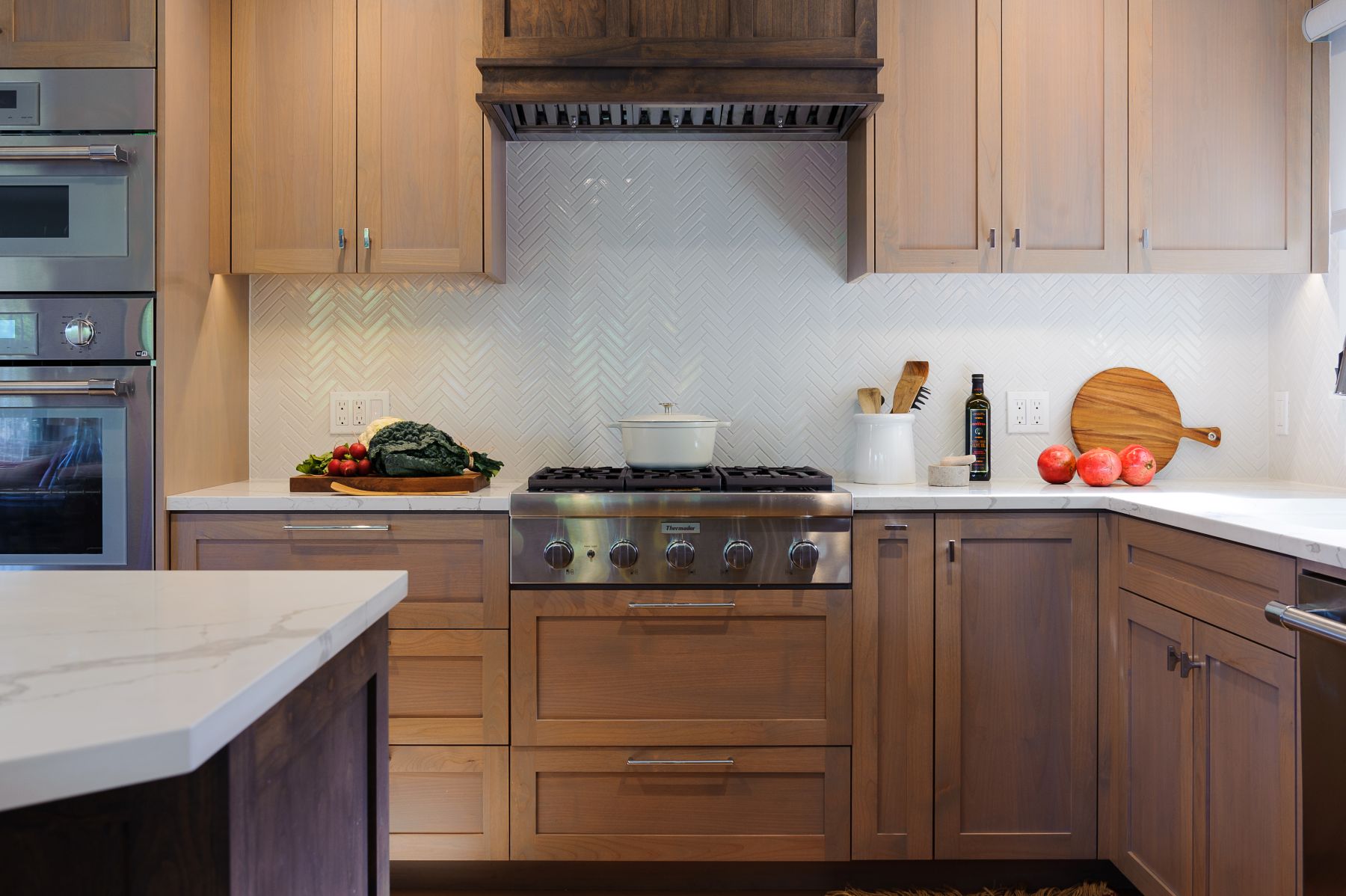
In one of my kitchen designs, I used a white herringbone backsplash with warm wood cabinetry and a light countertop. The tile itself is classic, but the herringbone installation adds movement and personality. The result doesn’t depend on a particular color trend or an elaborate pattern. Instead, the interest comes from the relationship between the tile, cabinetry, countertop, and architectural details. This is one of my favorite ways to approach a backsplash: take a familiar material and use it thoughtfully rather than choosing something dramatic simply for the sake of being different.
A Statement Backsplash Can Also Feel Timeless
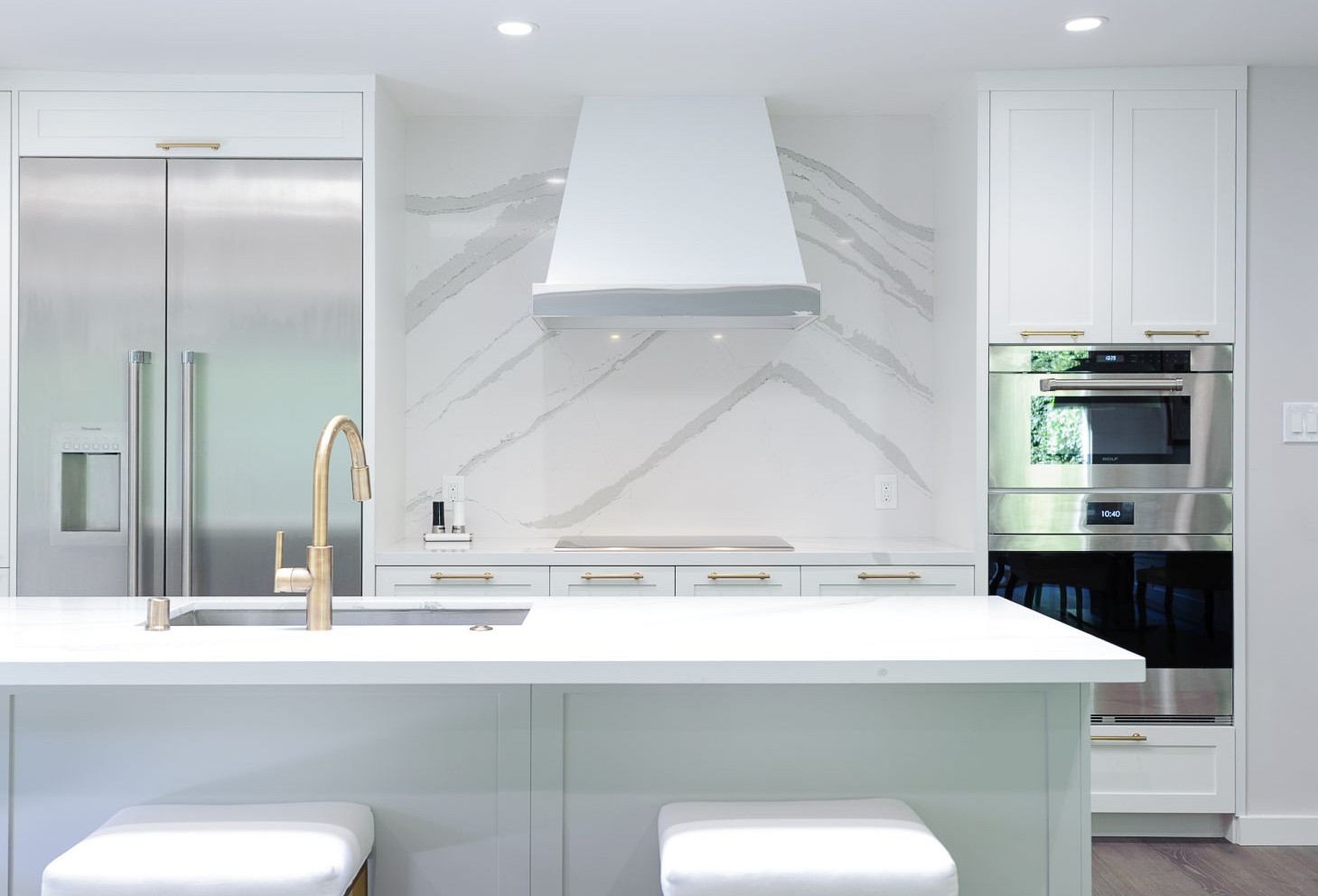
Timeless design doesn’t always mean a quiet backsplash. A material with strong movement or a distinctive pattern can become a beautiful focal point when the surrounding finishes are intentionally restrained. For example, in another kitchen design, I used a large-format material with pronounced veining as the backsplash. The cabinetry is simple and light, and the hardware is understated, allowing the backsplash to become the focal point without making the room feel visually busy. This is an important distinction: a statement element isn’t necessarily a trend. A bold material can have lasting appeal when it feels connected to the architecture and the overall design of the room.
Think About the Whole Room
One of the most common mistakes when selecting a kitchen backsplash is choosing a tile because it looks beautiful on its own without considering how it will interact with everything around it. A backsplash with a lot of movement may compete with a heavily veined countertop. A strongly patterned tile may become overwhelming when paired with detailed cabinetry, decorative lighting, and other statement finishes. On the other hand, if your kitchen has simple cabinetry and understated finishes, the backsplash may be the perfect place to introduce texture or pattern. Think of the kitchen as a whole rather than making each selection independently.
Consider Longevity: Don’t Design for Resale Alone
It’s easy to hear that you should choose a “timeless” backsplash because you’ll eventually want to sell your home. Resale is certainly worth considering, particularly when you’re making a significant investment in a kitchen remodel. But I don’t believe every design decision should be based on the hypothetical preferences of a future buyer. If you’re investing in a kitchen you expect to live with for many years, your home should reflect the way you live and what you genuinely enjoy. A thoughtful design can be both personal and enduring.
Instead of asking: “Will this still be trendy in five years?”
I encourage clients to ask: “Will I still enjoy living with this?”
That’s a much more useful question.
Where Should You Take a Design Risk?
If you’re drawn to a bold backsplash but aren’t sure you’re ready to commit, consider the overall visual hierarchy of your kitchen. You don’t need every finish to make a statement. If the countertop, cabinetry, backsplash, lighting, and hardware are all visually strong, the room can start to feel busy. But if most of the kitchen is relatively quiet, a more distinctive backsplash can provide just the right amount of personality.
The same principle applies to color. You don’t have to choose the boldest version of a color to make an impact. A muted or nuanced color can introduce warmth and character while remaining easier to live with over time.
The Bottom Line: Choose With Intention
There is no single backsplash tile that is universally timeless—and there is nothing inherently wrong with choosing something current. What matters is why you are choosing it and how well it works with the rest of your home. A successful kitchen backsplash should support the architecture, complement the other finishes, and feel appropriate for the way you live. It can be quiet or expressive, traditional or modern, simple or detailed. The goal isn’t to create a kitchen that looks like it could belong to anyone. It’s to create a kitchen that feels distinctly yours—and will continue to feel right long after the latest trend has passed.
If you’re planning a kitchen renovation and need help bringing cabinetry, countertops, backsplash tile, lighting, and other finishes together into a cohesive design, an experienced interior designer can help you evaluate the choices as a whole rather than one finish at a time.
*Featured project photography by Yoko Oda Interior Design.