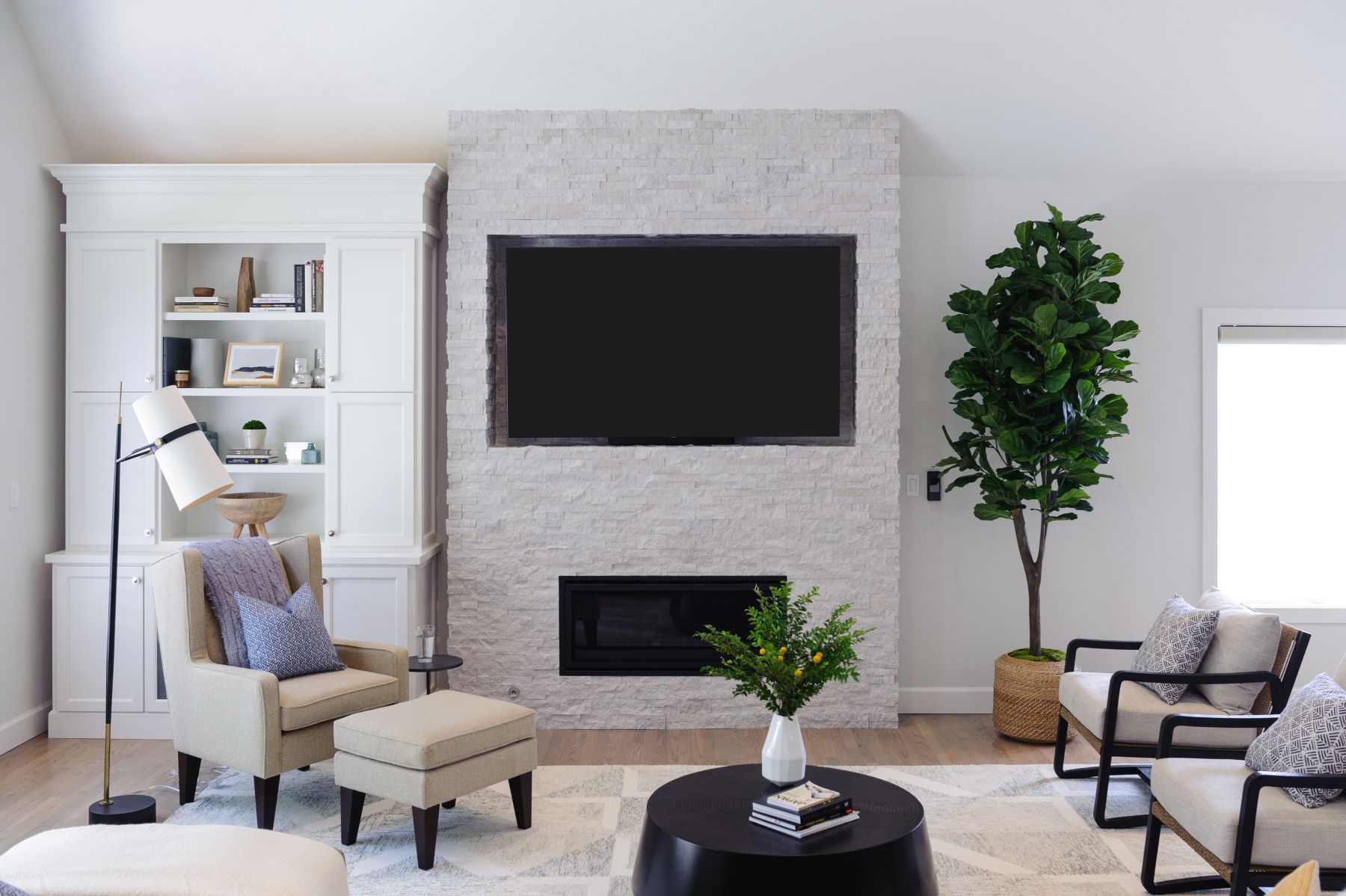
A fireplace naturally draws attention, but the best fireplace designs don’t simply become the focal point of a room. They feel as though they belong there. When I’m designing or renovating a fireplace, I look beyond the fireplace itself. Its proportions, surrounding materials, architectural details, and relationship to the rest of the room all matter. A fireplace can be beautiful on its own, but it becomes much more successful when it feels connected to the architecture and to the way the room is lived in.
Start With the Architecture
Before choosing a stone, tile, or fireplace surround, I look at the room as a whole. How tall is the ceiling? Where are the windows? What is the scale of the room? Is the fireplace centered within the architecture, or does it need to work with an asymmetrical layout? These questions are important because a fireplace that is too small can feel lost in a large room, while one that is too dominant can overwhelm a more intimate space.
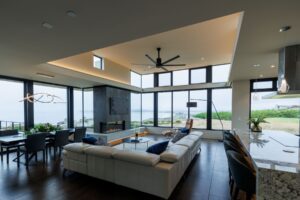
In one of my Danville projects, the living room had a dramatic 22 foot ceiling. The original fireplace was not proportional to the scale of the room, so we replaced it with a horizontal gas fireplace and surrounded it with floor to ceiling natural stone. The stone gave the fireplace enough visual weight to relate to the height of the room without making the design feel overly ornate. A custom entertainment center helped balance the composition and integrate the fireplace into the larger wall. The result is a good example of why proportion matters. The fireplace works not because it is meant to be noticed, but because it feels appropriate to the room around it.
Let Materials Do the Work
A fireplace doesn’t need elaborate detailing to make an impression. Natural stone, tile, brick, plaster, and wood can each create a very different character. The right choice depends on the architecture of the home and the atmosphere you want to create. I tend to favor materials with a sense of permanence and natural variation. Stone, for example, can add texture and depth while connecting the interior to the natural landscape outside.
The scale and placement of the material matter just as much as the material itself. Taking a stone surround all the way to the ceiling can emphasize verticality and connect the fireplace to the architecture. A more restrained surround can make sense in a room where the fireplace should recede rather than dominate.
The goal isn’t to make the fireplace the most interesting thing in the room. The goal is to make it feel like it was always meant to be there.
Consider the Entire Fireplace Wall
One of the most common mistakes I see is thinking about the fireplace as an isolated element. A fireplace wall is a composition. Windows, built in cabinetry, artwork, lighting, television placement, and surrounding furniture all influence how the fireplace will ultimately look and function.
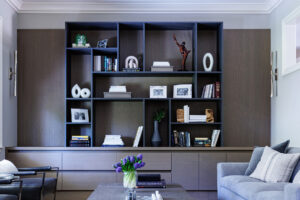
In another Danville project, the existing fireplace was too small for the proportions of the room. We replaced it with a larger gas insert and framed it with natural stone tile extending to the ceiling. We also added new casement windows on either side of the fireplace to bring in more natural light and better connect the room with the backyard. Custom entertainment cabinets below the windows completed the composition while providing practical storage. The fireplace became part of the architecture rather than simply an object placed against the wall.
Think About How You Actually Use the Room
A beautiful fireplace still needs to work for everyday life. Do you want the fireplace primarily for ambiance, or will it be a significant source of heat? Do you want a television above it? Will the room need storage? Is there enough space for comfortable furniture placement? These practical questions should be considered before the design is finalized.
The type of fireplace also matters. Gas inserts, traditional wood burning fireplaces, and other systems each have different installation, ventilation, clearance, and construction requirements. This is one reason fireplace design is often best considered as part of a larger renovation rather than as an isolated decorative update.
Sometimes Less Is Enough
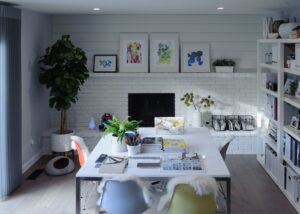
Not every fireplace needs a complete renovation. In my own Walnut Creek studio, I had an existing wood burning fireplace that no longer suited the character of the room. Since I wasn’t using it for heating, I approached it as an architectural feature rather than replacing the fireplace itself. I painted the brick white and added shiplap above the mantel. It was a relatively simple change, but it gave the fireplace a cleaner relationship with the rest of the room and added architectural interest without making the space feel overdesigned.
Sometimes the right solution isn’t a major transformation. It’s simply understanding what the room needs and knowing when to stop.
A Fireplace Should Feel Part of the Home
The most successful fireplace designs aren’t necessarily the most dramatic ones. They are the ones that feel connected to the architecture, appropriate to the scale of the room, and consistent with the materials and character of the home.
Whether you’re renovating an existing fireplace or designing one as part of a larger remodel, start by looking at the entire space. Consider proportion, materials, function, and how the fireplace relates to everything around it. When those elements are considered together, the fireplace can become something more meaningful than a focal point. It becomes part of the architecture of the home.
Featured project photography by Yoko Oda Interior Design.